Back
The fibre gap in the Gulf
 by Feel Team
Feel Team
Table of contents

The fibre gap in the Gulf
Most adults in the Gulf fall short on fibre. The daily target is 25g. One sachet of Feel Fiber Jelly gives you 9.5g: 38% of it in one serving. Here is the gap, and how to work out yours.
There is no single number for how much fibre people across the Gulf eat. But every national survey and study we could find points the same way: short.
The World Health Organization says adults should get at least 25g of fibre a day from food. Across Saudi Arabia, Qatar, Kuwait and the UAE, the evidence shows most adults are not getting there.
25g: the daily fibre target
How much of it one sachet covers.
An easy way to top up your daily fibre.
38% of your daily target in one servingDaily target: WHO Carbohydrate Intake Guideline (2023). Fibre intake evidence: UAE National Health and Nutrition Survey 2024-25 (MoHAP) and Qatar National STEPwise Survey (BMC Public Health, 2018).
What the Gulf data shows
Each country measures diet differently, and some have not published a fibre figure at all. So this is not a league table. It is a set of signals. They all say the same thing.
Recorded in a study of 359 healthy adults in Al-Madinah. About half the daily target.
Healthcare, 2022 (fieldwork 2018-19)More than 83% of Qatari adults did not meet recommendations for vegetables, fruit, wholegrains, legumes and fibre.
Qatar National STEPwise Survey, analysed in BMC Public Health, 2018The national nutrition survey found fibre intake had dropped as Kuwaiti diets modernised.
Kuwait National Nutrition Survey 2008-09The region's newest national figure. Still below the 25g target.
UAE National Health and Nutrition Survey 2024-25Researchers describe the same shift across the region: from fibre-rich traditional eating to low-fibre, Western-style diets. Dates, grains and home cooking gave way to refined bread, white rice and convenience food. The fibre went with them.
Work out your own fibre gap
Regional data is abstract. Your own number is not. Tap everything you ate yesterday. Tap more than once if you had more than one portion. Right-click or long-press a tile to remove one.
The fibre gap calculator
Built on typical portion sizes and the 25g daily target. Nothing is stored or sent anywhere.
Start tapping to see where you land.
Most people are surprised. The foods we think of as "healthy" are often not the ones carrying the fibre.
Values per typical portion, rounded, from USDA FoodData Central. Mixed dishes (foul, lentil soup, tabbouleh, bamia, freekeh) are estimates and vary by recipe. Treat your result as a good estimate, not a lab measurement.
Why a healthy-feeling day still falls short
If your staples are white bread and white rice, and pulses are an occasional dish rather than a daily one, you are very likely under 25g. Even a day that feels balanced can land well short.
A day that feels healthy, and what moves it
Banana for breakfast. Rice, grilled chicken and a green salad for lunch. Hummus and white bread as a snack. A falafel wrap for dinner. The dashed line is the 25g target.
Day built from the calculator values above (USDA FoodData Central, rounded). Banana 3.1g; white rice 0.7g; green salad 2.0g; hummus 3.6g; falafel 2.5g; two white flatbreads 2.8g. Swapping both to wholewheat adds 6.6g. One sachet of Feel Fiber Jelly adds 9.5g.
Two bread swaps get you closer. They do not get you there. One sachet does, without changing what you eat.
We used to eat a great deal more than this
Human digestion evolved on far more fibre than any country eats today. Estimates for palaeolithic diets regularly exceed 100g a day, from a huge range of plants rather than a handful of staples.
Estimated daily fibre intake across human diets
Note the scale. The first two bars are estimates, not measurements. Read the source note.
Palaeolithic estimate: Leach JD, European Journal of Clinical Nutrition 2007;61:140-142. Hadza figure: an estimate by Stanford microbiome researcher Justin Sonnenburg, reported by NPR in 2017. This is a researcher's estimate reported in journalism, not a published dietary measurement. Read it as an order of magnitude. Peer-reviewed Hadza microbiome work: Schnorr et al., Nature Communications 2014; Smits et al., Science 2017. Saudi figure: study of 359 adults in Al-Madinah, Healthcare 2022.
When the Hadza shift seasonally to a meat-heavy, low-plant diet, whole groups of gut bacteria drop to undetectable levels. They return when berries and honey come back. The same bacterial groups are permanently low or absent in industrialised guts. Fibre is what feeds them.
Why 25g matters
The strongest evidence on fibre and long-term health is a 2019 series of systematic reviews and meta-analyses in The Lancet, commissioned by WHO to inform its guidelines. It pooled 185 prospective studies, around 135 million person-years of follow-up, alongside 58 clinical trials.
Change in risk per additional 8g of daily fibre
Pooled relative risk from prospective cohort studies. Lower is better.
Reynolds A, Mann J, Cummings J, Winter N, Mete E, Te Morenga L. Carbohydrate quality and human health: a series of systematic reviews and meta-analyses. The Lancet 2019;393(10170):434-445. Relative risks per 8g/day: all-cause mortality 0.93 (95% CI 0.90-0.95); coronary heart disease 0.81 (0.73-0.90); type 2 diabetes 0.85 (0.82-0.89); colorectal cancer 0.92 (0.89-0.95). Certainty of evidence graded moderate for most outcomes.
Two findings matter for your daily number. The biggest benefit was seen at 25 to 29 grams a day. That is why WHO set 25g as the adult target. And the authors found no clear ceiling: higher intakes may give further benefit still.
So 25g is where the benefit starts, not where it stops. One sachet covers 38% of it. For anyone sitting in the low teens, that is the biggest single step available.
These findings come from diets rich in fibre from whole foods. They are not evidence for any single product. Food comes first. A sachet helps close the gap alongside it.
What closing the gap actually takes
For many adults in the Gulf, reaching 25g means adding 10g or more a day, every day. Here is that 10g as real food, and what each option asks of you.
| Ways to add about 10g | Fibre | What it takes |
|---|---|---|
| One sachet of Feel Fiber Jelly | 9.5g | Tear and eat. Anywhere. |
| A bowl of foul medames (150g) with one wholewheat flatbread | 12.2g | A sit-down breakfast |
| 120g chickpeas in a salad with a side of tabbouleh | 12.1g | Soak and cook, or open a tin and prep |
| 45g oats with 30g dried figs and an apple | 11.8g | Breakfast at home |
| A bowl of lentil soup, 3 dates and a handful of pistachios | 10.4g | Cook a pot |
| Five large bowls of lettuce, cucumber and tomato salad | 10.0g | Not realistic |
Values from USDA FoodData Central, rounded. Mixed dishes are estimates.
The food options work, and they bring more than fibre. The hard part is doing one of them every single day, through busy weeks, summer heat and Ramadan. That is the gap most people never close.
Ask for a high-fibre food and many people say salad. A large bowl of lettuce, cucumber and tomato carries about 2g. One wholewheat flatbread carries more than double that. A bowl of foul carries closer to 7.5g. The foods that move your number are pulses, wholegrains, nuts, seeds and dried fruit. Leafy salads are excellent for many reasons. Bulk fibre is not usually one of them.
How to close it, every day
Set a floor you can count on
Food intake swings day to day. A dinner out, a long day at work, a week of heat. The simplest fix is a fixed daily dose that does not depend on what you cook. One sachet gives you 9.5g you can rely on. Food does the rest.
Then change the staples, not the extras
A side salad achieves very little. Swap white bread for wholewheat. Swap some white rice for brown rice, freekeh or bulgur. Add a tin of chickpeas or lentils to a saloona or stew you already cook. The fibre is in the base of the meal, not the garnish.
Go steadily, and give your gut time
Fibre that reaches your colon is fermented by gut bacteria. That makes useful compounds, and some gas. A jump in fibre can mean bloating at first. In a six-week trial that took people to 25-35g a day, discomfort was higher in the early weeks and had largely settled by week six as the gut adapted. Start with one sachet a day, keep your food changes gradual, and expect a couple of weeks to adjust.
Drink more water than you think you need
Fibre draws water into the bowel. Increase one without the other and constipation can get worse, not better. In Gulf heat, and on days you are active or outdoors, you lose more fluid than you notice. Have a glass of water with your sachet and keep drinking through the day.
During Ramadan, plan the suhoor
Long fasts and less water can leave digestion sluggish. Build suhoor around fibre-rich foods: oats, foul, wholewheat bread, dates. A sachet fits easily into suhoor or after iftar. Spread water between iftar and suhoor rather than drinking it all at once. If you are adding fibre, start a couple of weeks before Ramadan, not on the first night.
Mix your fibres
Different fibres do different jobs, and gut bacteria thrive on variety. The American Gut Project found people eating more than 30 plant types a week had more diverse gut bacteria than those eating ten or fewer. It is an observational study, so treat 30 as a rule of thumb, not a prescription. More plant variety, more fibre types, is the direction to aim for.
If you have irritable bowel syndrome, adding fibre is not straightforward. Clinical guidance generally favours soluble fibre such as psyllium over insoluble fibre such as bran. Fermentable fibres, including inulin and fructooligosaccharides, are FODMAPs and can worsen symptoms in some people. If you have a history of bowel obstruction or strictures, inflammatory bowel disease in a flare, difficulty swallowing, or you cannot keep up your fluids, speak to your doctor before increasing fibre significantly.
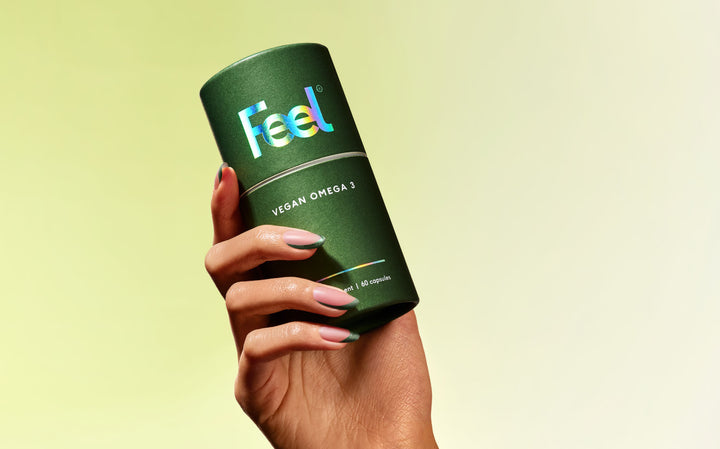
One sachet. 9.5g of fibre. No prep.
Feel Fiber Jelly is a ready-to-eat passion fruit jelly in a 25g sachet. No water. No powder. No shaker. Just tear and eat.
Each sachet carries 9.5g of dietary fibre from four plant sources, each doing a different job. Psyllium husk is a soluble fibre that forms a gel with water. Inulin and fructooligosaccharides are fermentable fibres your gut bacteria feed on. Resistant dextrin is a soluble fibre that rounds out the dose. Plus four superfood powders.
That is 38% of your 25g daily target, in one serving.
It also provides copper. Copper contributes to normal energy-yielding metabolism, to the normal function of the immune system, and to the protection of cells from oxidative stress.
Food first, always. The sachet is there for the 9.5g you can count on, every day.
Common questions about the fibre gap
How much fibre should I eat a day?
WHO recommends at least 25g a day for adults, from food. Children need less: at least 15g at ages 2-5, 21g at 6-9 and 25g from age 10.
Do people in the Gulf really fall short?
Every national survey and study we found points the same way. A Saudi study recorded 12-14g a day. More than 83% of Qatari adults missed recommendations for fibre-rich foods. Kuwait's national survey found fibre intake falling. Even the UAE, with the region's newest national figure, averages 23.1g, still under 25g. Work out your own number with the calculator above.
Can Feel Fiber Jelly replace fibre from food?
It is designed to work alongside food, not instead of it. Wholegrains, pulses, fruit and vegetables bring vitamins, minerals and other plant compounds as well as fibre. What the sachet gives you is a reliable 9.5g every day, 38% of your target, whatever the rest of your day looks like.
When is the best time to have it?
Whenever suits your routine. Consistency matters more than timing. Have it with a glass of water. During Ramadan, have it at suhoor or after iftar.
How long does it take to adjust to more fibre?
In the best controlled trial on this, discomfort was higher in the first couple of weeks and had largely settled by week six. People who already ate plenty of plants adapted fastest. Start with one sachet a day, drink plenty of water, and give your gut a few weeks.
- World Health Organization. Carbohydrate intake for adults and children: WHO guideline. 2023.
- UAE Ministry of Health and Prevention. National Health and Nutrition Survey 2024-2025. Findings released 6 January 2026. wam.ae
- Al Thani M et al. Adherence to the Qatar dietary guidelines: a cross-sectional study of the gaps, determinants and association with cardiometabolic risk amongst adults. BMC Public Health 2018;18:503. Based on the Qatar National STEPwise Survey 2012.
- Study of 359 healthy adults in Al-Madinah, Saudi Arabia, fieldwork 2018-2019. Healthcare 2022;10(4):730.
- Ministry of Health, Kuwait. Kuwait National Nutrition Survey 2008-2009. Nutrient intake analysis: PMC10271306
- Reynolds A et al. Carbohydrate quality and human health: a series of systematic reviews and meta-analyses. The Lancet 2019;393(10170):434-445.
- Leach JD. Evolutionary perspective on dietary intake of fibre and colorectal cancer. European Journal of Clinical Nutrition 2007;61:140-142.
- Smits SA et al. Seasonal cycling in the gut microbiome of the Hadza hunter-gatherers of Tanzania. Science 2017.
- McDonald D et al. American Gut: an Open Platform for Citizen Science Microbiome Research. mSystems 2018;3(3):e00031-18.
- Deehan EC et al. Adaptation to tolerate high doses of arabinoxylan is associated with fecal levels of Bifidobacterium longum. Gut Microbes 2024;16(1):2363021.
- USDA. FoodData Central. fdc.nal.usda.gov
This article is general information, not medical advice. If you have a diagnosed digestive condition, are pregnant, or take regular medication, speak to your doctor or a registered dietitian before making significant changes to your fibre intake. Food supplements should not replace a varied, balanced diet.